
Ian Florance talks to Anne Scoular about her late blossoming career in business coaching
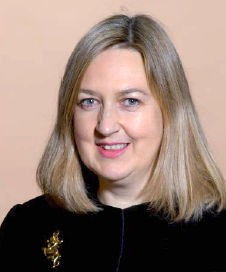
I met Anne Scoular in the lounge of the Royal Society of Medicine, where she is a member, a rare honour for a non-medic. She retrained as a psychologist in her 40s and, in her new book Business Coaching, describes it as ‘one of the most profoundly satisfying things I’ve done’. And that’s saying something, given her extraordinarily varied career, huge range of interests and wide knowledge – during our conversation we touch on the development of the Korean language, themes from art history, Adam Smith and behavioural economics, and a biography of a clerical ancestor she is writing. Anne’s coaching book, published by Financial Times Guides, has some fascinating and sometimes critical insights into the role of psychologists and status of psychology. So, slightly intimidated by the hallowed surroundings and Anne’s huge range of references, I start by investigating her unusual route into psychology.
‘I was born in Dunedin, New Zealand. It was really a pre-war upbringing because Dunedin still had that culture. My family were passionate about books and education. Although my mum was a typical New Zealander, always chasing me out of the front door to get fresh air and exercise, a few moments later I’d be slipping in by the back door to read English pre-war children’s books, where snow always fell in the winter and small cottages nestled in nooks between rolling downs.’ Anne took a degree in history (‘in the process becoming a world-class expert in the history of rabbits – don’t ask!’), achieving a first, before joining the New Zealand diplomatic service at the age of 21. ‘As far as I remember, I decided to join the diplomatic service because of a scene in a 1950s film in which a gorgeously dressed lady US ambassador swept down a staircase into a waiting car. I wanted to be that person.’
Anne worked in Singapore and Malaysia but says she ‘wasn’t a natural bureaucrat. I was headhunted by the Bank of New Zealand and set up trade services in Australia, Singapore, Tokyo and on the West Coat of the USA. My husband was posted to Korea and, by good fortune there was an opportunity to set up a representative office of the bank in Seoul.’
In 1987 Anne was in the old city of Kyongju on a tour hosted by the Korean Development Bank when the stock market crashed. ‘There was only one phone and we were running round like mad things. The Bank of New Zealand handled 60 per cent of the country’s economy and it nearly went under.’ Anne moved back to New Zealand to work with the new CEO, in absolute secrecy, on a survival plan for the bank. ‘We were working all hours with a variety of different suppliers and experts. But that was where my interest in psychology started, I think. It was my first real exposure to change management. The approach to the recapitalisation and restructuring of the bank was in typical “1980s McKinsey” style – based on organograms – and it seemed to leave people out of the picture.’
For a while Anne lived a peripatetic life: in Canada; on a three-month project for the UN (‘I went to the opera every night’); and working for a small financial PR start-up company in Singapore, which ‘grew from zero to a million turnover in eight months’.
Anne came to England in 1993. ‘When I was a diplomat I used to come here on holiday all the time. A lot of us did. It felt like home. And now it is home.’
Anne worked for Jeffrey Gray at the Institute of Psychiatry in the commercial arm of Psychology at Work. ‘It pretty soon became clear that I wanted to start working in psychology rather than working for psychologists so I took a conversion course at London Guildhall University – great teaching, terrible facilities – then did my MSc as a sort of gap year, though I was still working. By then I had set up my business. If you are thinking of going it alone, get your timing right. I came to a new country in 1993 when, for various reasons I was broke. My mother died in ’93, my father in ’96, my first husband died in ’97 and I was made redundant by Psychology at Work in ’96. It was madness to go out on my own in 1996, but I did, and scraped through, building back up to the point where I was able to co-found Meyler Campbell in 1999.’
Does your role as a psychologist build on your earlier experiences? ‘You could say my career has been a perfect downward graph from international diplomat to business coach. But another way of looking at it is that I found out what I was interested in later in life than other people. Putting people and business together in business coaching suddenly seemed an obvious thing to do. So, I think it was actually the start of my real career.’
Anne is Managing Director of Meyler Campbell, a company I knew a bit about before I interviewed her. They regularly send e-mails about events, including a prestigious series of annual lectures covering issues ranging from positive psychology to groupthink. The company trains senior people to coach through an accredited programme, then provides CPD, learning and networking opportunities as well as undertaking research. ‘Business coaching is only about 25 years old. It’s going to be a long time before we have a really solid research base for the activity so we’re trying to contribute to it. We tend to work in a very Oxford tutorial style: that might be wish-fulfillment because I never went there! The alumni/CPD programme takes up 40-60 per cent of my time and is hugely important as it provides a real opportunity for like-minded people to get together and learn from each other. The field is changing quickly and it enables them to keep up with ideas.’
I ask whether this draws on the ways psychologists use CPD. ‘I think one of the things all coaches can learn from psychology is its emphasis on a professional ethos. Psychologists seem to imbibe that approach, often without realising it, through training, supervision and CPD. They don’t over claim, they know their boundaries. They are good at the “contract” stage of working with a client. They meta-think: they analyse their own approach and come up with thoughtful hypotheses. And they’re very aware of certain aspects of human relations that others might be less aware of, like not accepting what’s said at face value. Coaches, leaders and managers tend to know less about social psychology than, say, psychometrics and there are hugely important insights here: there needs to be more widespread training in organisational, group, team and organisational dynamics.’ So, I suggest tentatively, psychologists are well equipped to coach in business. Anne smiles. ‘You have to remember that the people who we train come from many different backgrounds – leadership, HR, directorships – with a rich heritage of experience, sometimes built up over decades. Psychology is just one among those many areas of specialist knowledge. The fundamental difference is that other people want to be trained and psychologists sometimes think they don’t have to be. Psychologists, like everyone else, have to learn the skills and craft of coaching and, in my experience, they don’t get that on their psychology qualifying courses. In the first four to five months of our Business Coach Programme we put people’s experiences to one side and focus on being nondirective, because this is where we can make the most difference. After that’s achieved, and it’s tough work, there’s a wonderful period where people reintegrate what they know and everyone becomes a different sort of coach. We don’t have a house style or approach to coaching – as we say, “We don’t care which point of view you have, but we do care that you have a point of view”. Psychologists are no different from any other experienced profession when they come to us.’
‘Look at it another way, psychology is one of the two major source disciplines in business coaching. The other is – as it says on the tin – business. Even if you know a lot about one of them you have to learn about the other… and then train to apply the knowledge ethically and effectively in a service which is still investigating itself, innovating and researching. Even if you know a lot about therapy or counselling in other contexts you’re going to meet very different clients in business coaching – they’ll be more prone to challenge, more hierarchical. You’ll need to learn to deal with this.’
Anne’s book consistently references areas of psychology – from social and occupational to neuroscience – and its contribution to her area of expertise. It sometimes seems that coaching is one application where all types of psychology meet. It’s impossible to do justice to Anne’s views on this area – time was getting on. But we managed to cover some areas. ‘Social psychology is as important as cognitive/developmental psychology and much less known. A lot of the textbooks are rather off-putting. We need to rectify that. I tend to think developmental psychology needs to move out of the nought to two age range even more and come up with models and theories for lifelong development. We need them badly. Given increased pressures in business and more intensive work in personality theory, clinical psychology has a contribution to make in business. One of our annual lectures was on psychopaths in the workplace.’
Anne describes psychometrics as ‘invaluable’, but says ‘it’s a very narrow technique. It leaves out a lot, maybe most, of what is important in coaching. And while neuroscience is impacting our understanding of what coaching actually does, among many other things, it also represents the threat of reifying concepts and processes. Those wonderful full colour pictures and complex diagrams tempt to certainty when there is only a hypothesis. Positive psychology is gaining ground and has a contribution to make, but the name is rather fluffy for us cynical Europeans. I wish they’d called it functional psychology.’
As Anne gets up to leave, the person at the next table hands me his card. He works in experimental psychology at Cambridge University and while listening to our discussion, has been working on a proposal about factor structure for a test. It seems you find psychologists everywhere, even in the bastion of medical professionals! Anne suggests a rich two-way dialogue between coaching and psychology. She also evidences that psychology can grab you later in life… even if you’ve been an international diplomat.
The Psychologist – January 2012
 Download this article in PDF format.

